
Manual Core
Semantic authorization at runtime.
Give each tool a way to check the action an agent is asking it to take. Manual Core evaluates the request against the relevant process graph, the agent’s delegated permissions and the evidence from this run. Your application can allow the action, request a correction or send it for review.
Request a demo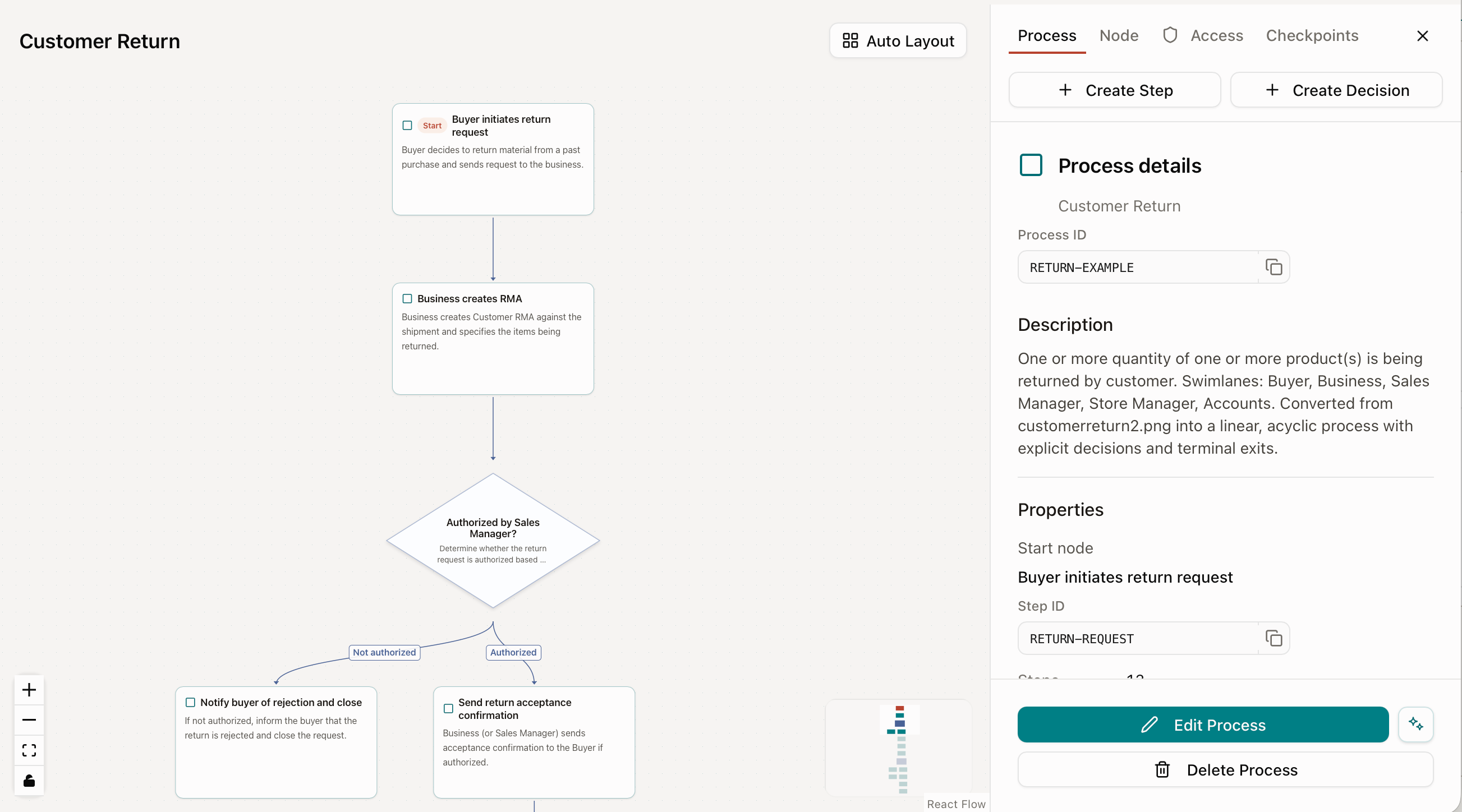
Check the action where it takes effect.
A refund tool can ask Core for authorization just before it moves money. The messaging tool can make a separate check before it sends the reply. Each tool chooses the evidence it needs for the effect it controls. Both can use the same process graph and execution record.
What is semantic authorization?- Process graphs
- Give agents a place to discover instructions, required evidence and available paths as the work unfolds. Agents retrieve just the nodes they need for the current task.
- Tool-side pre-authorization
- Require a lookup for the right order, a specific tool result or an audit callback. Use deterministic checks for exact facts and prerequisites.
- Semantic response checks
- Evaluate a proposed message against trusted examples and the evidence returned on this run. Tune checks to the cost of a bad decision and the cost of stopping valid work.
- Delegated identity and audit
- Apply the user’s delegated permissions at the point of action. An execution ID ties process graph steps, tool calls and outcomes together so you can investigate a decision.
- Model independence
- Agents can retrieve process graph context through the Model Context Protocol (MCP). They can use different models while the tools still enforce the same checks.
Example
Can the agent confirm this return?
A customer asks for a refund. The agent looks up the order and drafts a return merchandise authorization (RMA). Before saving it, the returns tool asks Manual Core to check the items and quantities against the shipment and compare the draft with known-good RMAs.
Before sending a confirmation, the messaging tool asks Core to verify that the agent looked up the sales manager’s decision and received approval for this return. Core can also check the draft itself. Does it tell the buyer what was approved? Do the details match the RMA? Does it follow the expected confirmation format?
Before issuing the refund, the payment tool can ask Core to verify the amount against a deterministic calculation using the approved quantities and the prices paid.
What can the agent do after a denial?
An agent can start with a goal, find the relevant process graph and gather the context the next step requires. A denied action can send it back for missing evidence, prompt it to revise a reply, or direct it to a person when the process graph calls for review.
Interested in learning more?
Core is for engineering teams shipping agents that do consequential work, where mistakes and hallucinations don’t cut it. Your team runs Core in its own environment from container images. Your tools call Core for authorization before they act.
Bring a workflow you’re building. We’ll show where a tool could ask for authorization and what feedback would let the agent keep working.
Request a demo